Clay Dynasty
Clay Dynasty
An exhibition design of studio ceramics in Australia as shaped by three generations of makers, starting from the 1960s pioneers who transformed the functional pottery tradition, to contemporary ceramic artists who continue to push the medium.
Location
Gadigal Country Ultimo, Sydney
Client
Museum of Applied Arts and Science
Completion
2021-2022
Collaborators
AX Interactive Powerhouse Ultimo
Photography
Zan Wimberley Brett Boardman
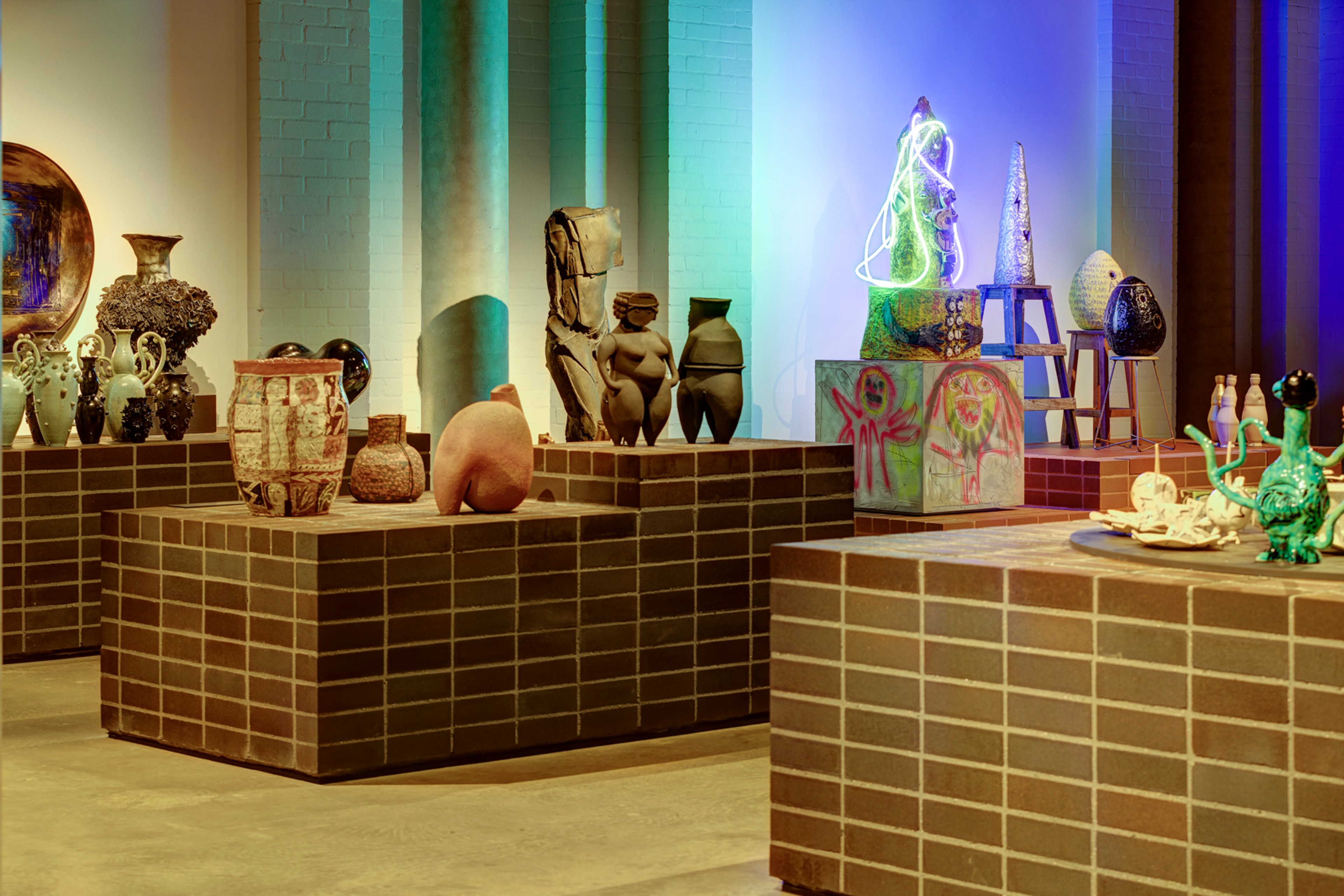
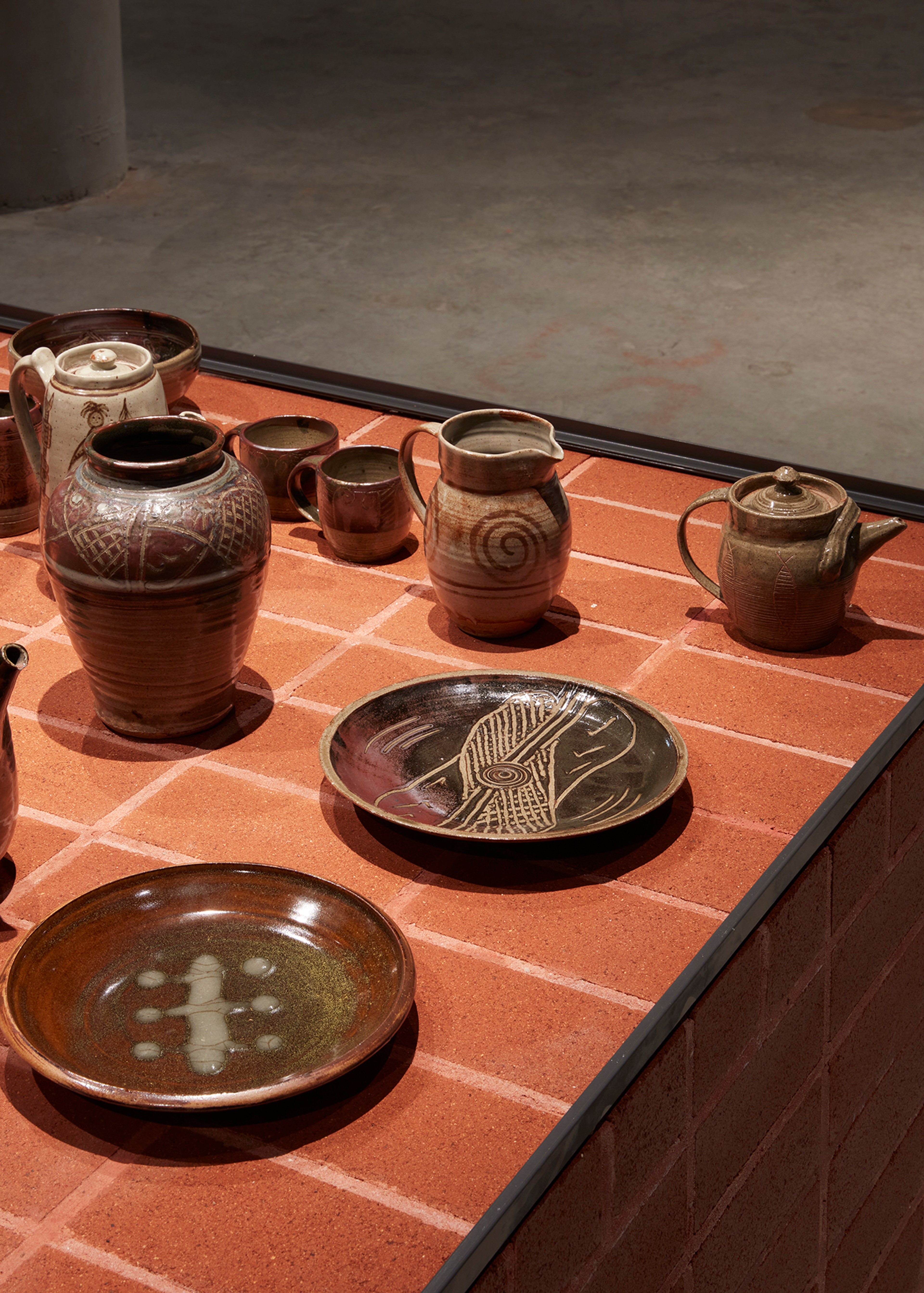
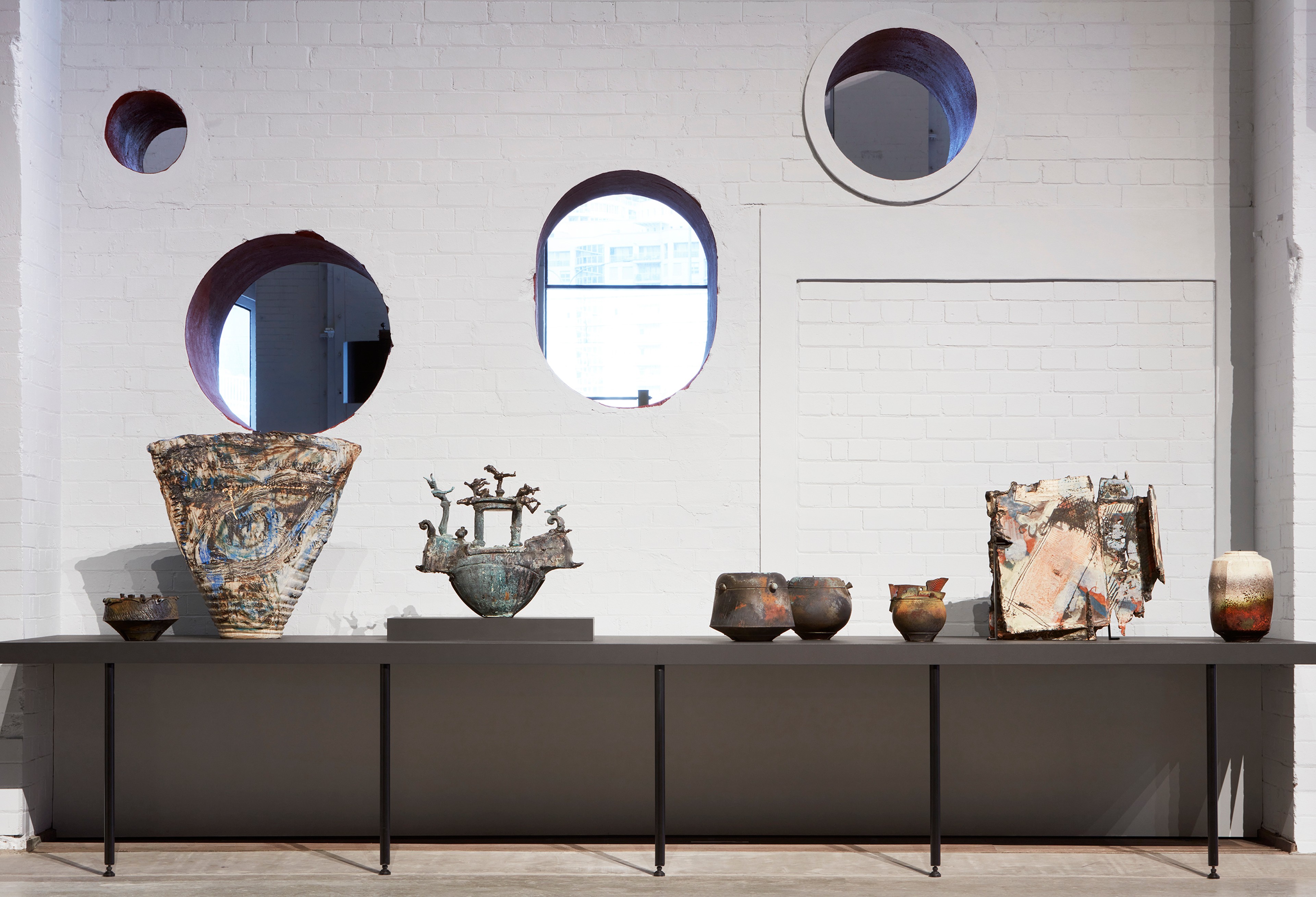
Located within the expansive Turbine Gallery, the exhibition presented over 400 works from the Powerhouse ceramics collection, revealing the expanse of ceramic practice in Australia — from the spectacular 70-piece collection of some of the earliest pottery made by Australian Indigenous makers in 1968 - 74 at the Bagot Pottery in Darwin to contemporary and postmodern works.
Aileen Sage designed the exhibition as a spatial conversation between these wildly different pieces, the industrial surroundings of the original powerhouse building, and the material language of clay itself, establishing a conceptual link between ceramics, construction, and domesticity.
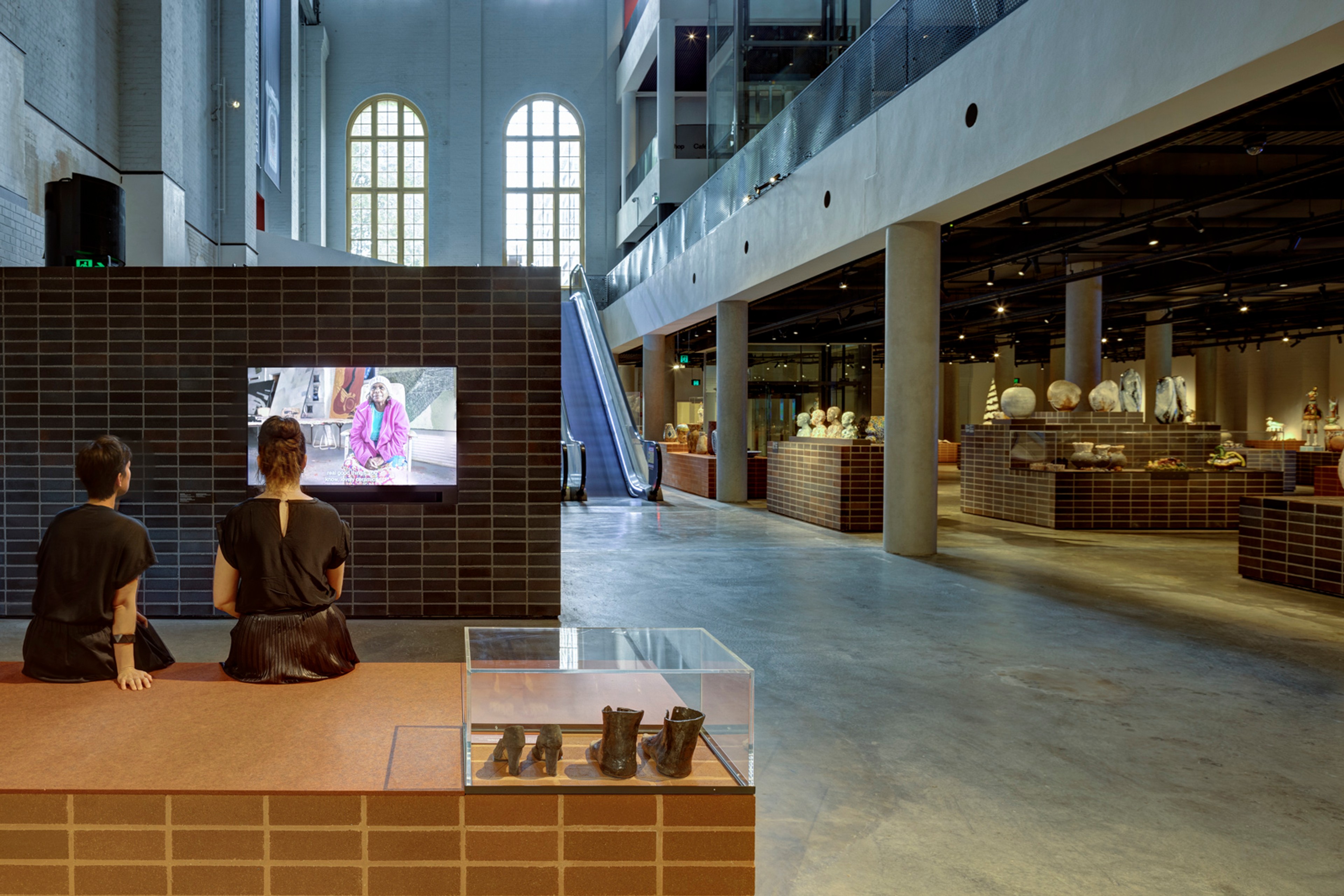
The objects sat on modular brick plinths, exposed and inviting unmediated engagement, and the exhibition layout was deliberately non-linear, allowing visitors to enter from multiple points and move freely through the space. Sight lines across the gallery revealed the diversity of the collection, with integrated brick seating inviting moments of submersion and reflection. Subtle material references — such as red bricks evoking desert landscapes and suburban homes, and darker bricks recalling Sydney School architecture — expressed cultural narratives without overt interpretation.
The exhibition was an experiential revival of the humble medium of clay and an applause for its artistic ingenuity.
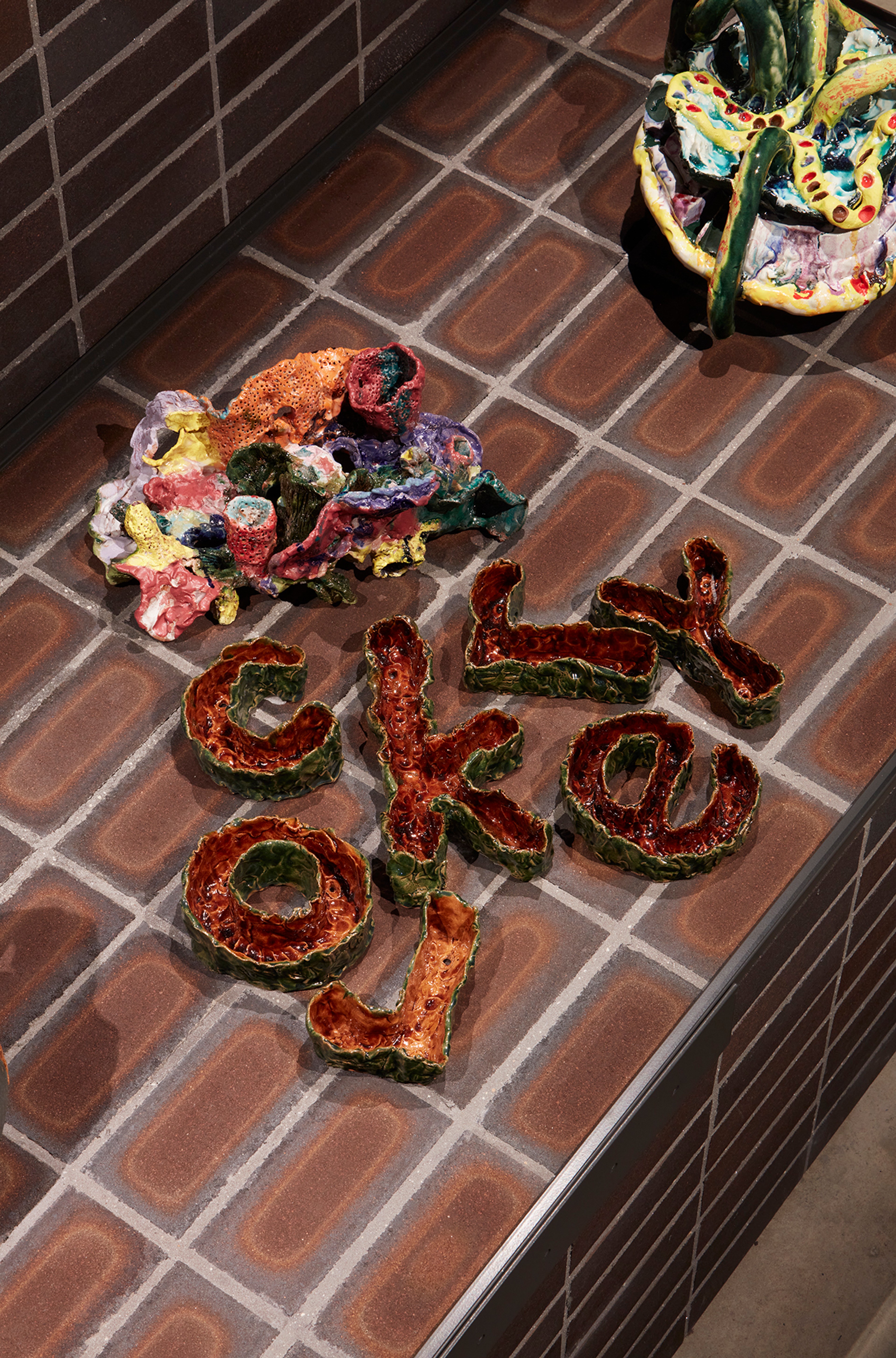
The brick plinths were intentionally designed to be easily demolished in order for the bricks to be reused in other local construction projects following the exhibition.
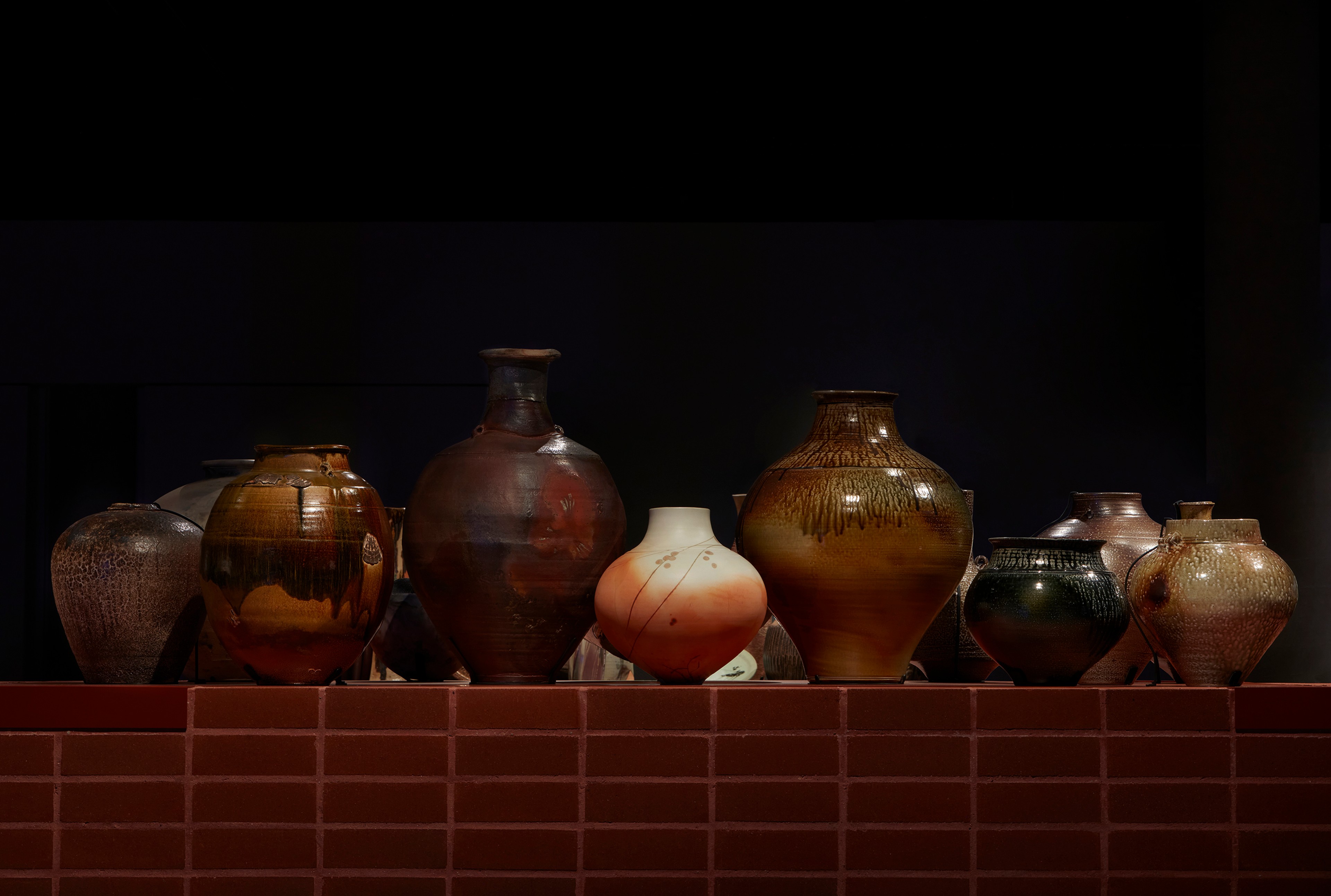
Dark bricks were chosen for their reference to local Sydney School Architecture where dark brick fireplaces and mantles commonly displayed the utilitarian but also decorative ceramic pieces of a new era of 1970s Australian ceramicists from which the exhibition collection begins.
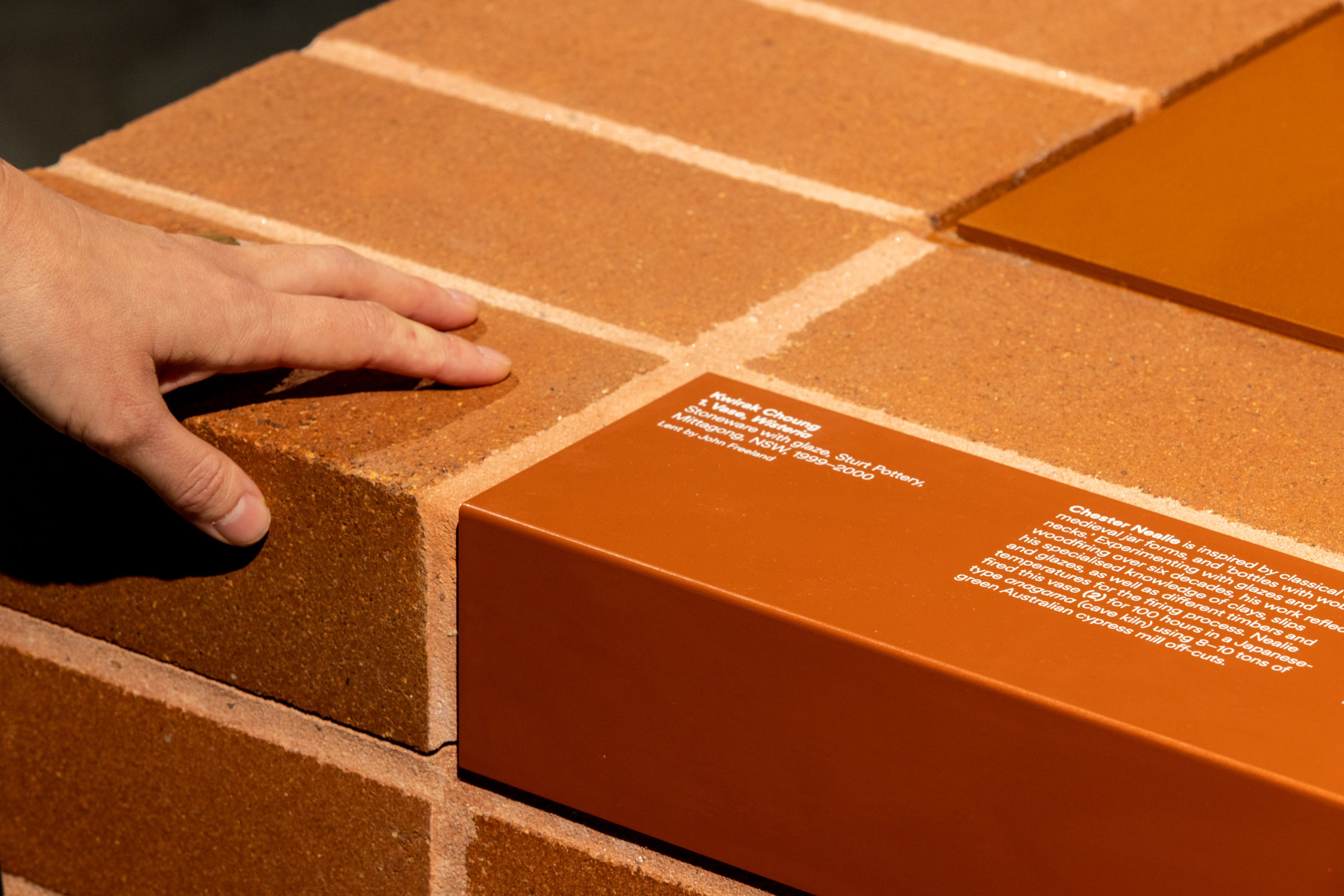
Red bricks recall Australian suburban houses but also the red earth of the desert, giving presence and glow in particular to the 70-piece collection of some of the earliest pottery made by Australian Indigenous makers between 1968 to 1974 at the Bagot Pottery in the Northern Territory.
The singular medium of clay throughout the exhibition highlights the versatility of the material and wild variation with which it has been (and continues to be) used as an incredible form of both expression and utility.